
The city of Banjul recently hosted the Women and Girls Climate Conference, a landmark event organized by the Young Africans Network for Global Goals under the Bloomberg Philanthropy project. At the center of this historic gathering stood ECOLUM, represented by its Executive Director, Hon. Abdoulie Njai, who was invited to serve as a Special Guest. His participation reflected ECOLUM’s growing leadership in advancing inclusive climate resilience and in shaping narratives that place women and girls at the forefront of sustainable development.
For ECOLUM, this conference was not just another occasion to join the climate discourse, but a vital opportunity to amplify its mandate of ecological stewardship, climate justice, and environmental sustainability through the lens of gender inclusivity. Hon. Njai’s presence, both as Executive Director and as a legislator, underscored a deep commitment to ensuring that the climate agenda in The Gambia becomes more representative, more responsive, and more people-centered.
The conference was structured to highlight the unique role of women and girls in shaping the green economy and in strengthening the resilience of communities. In his intervention, Hon. Njai made clear that ECOLUM views women not as passive victims of climate disruption but as active leaders in responding to it. He spoke passionately about the daily realities faced by women across Gambian communities women who collect water, manage household energy, cultivate food, and bear the brunt of environmental shocks when floods destroy farms or when drought disrupts livelihoods. He also stressed that these same women, when supported with resources, policies, and opportunities, are among the most innovative agents of adaptation, finding ways to recycle, conserve, and transform limited resources into resilience strategies that sustain their families and neighborhoods.
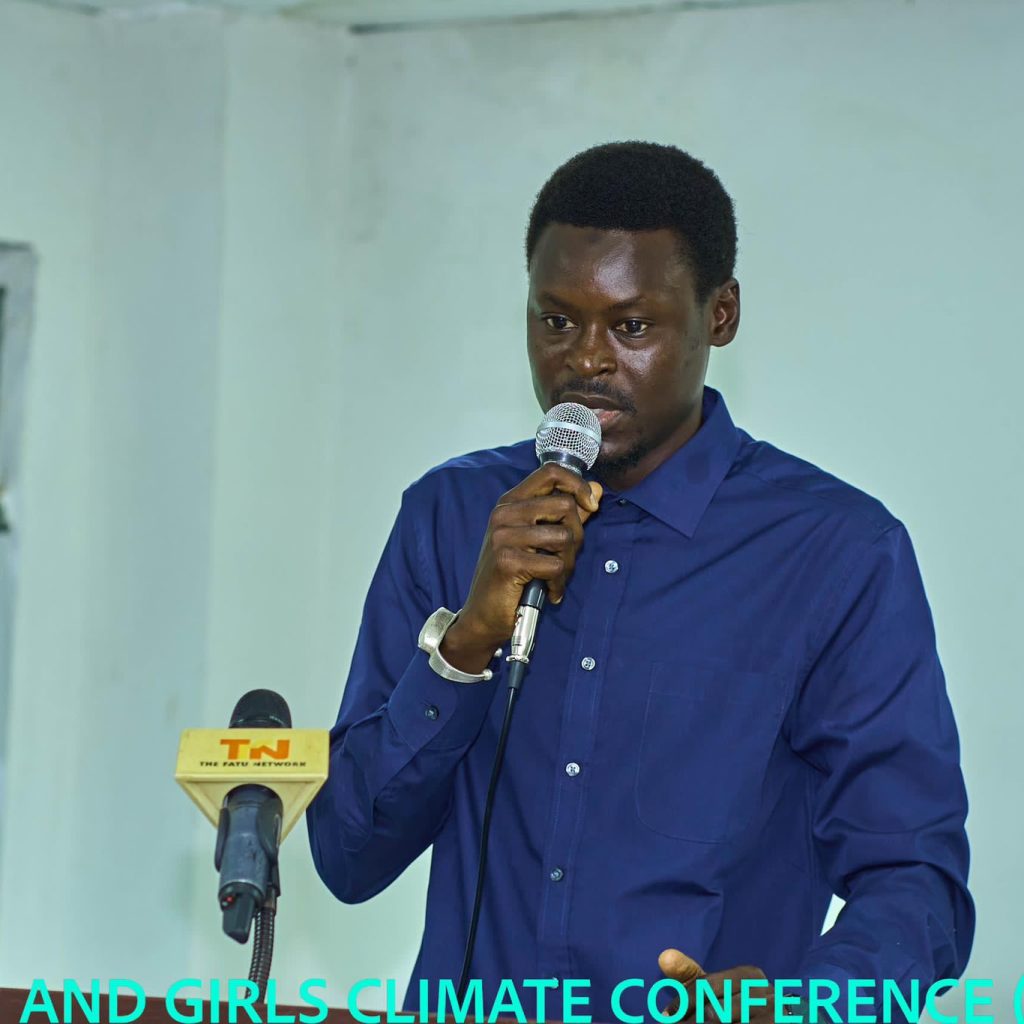
ECOLUM’s role in the dialogue was to bring a fresh and practical perspective that bridges the gap between policy and lived experience. Hon. Njai drew from ECOLUM’s growing body of work in climate advocacy and ecological restoration to demonstrate that solutions must be inclusive, community-driven, and gender responsive. He reminded the audience that empowering women and girls in climate action is not an act of charity or symbolism, but a strategy grounded in effectiveness. Communities that invest in the capacities of women are proven to be more adaptive, more cohesive, and more sustainable in the face of climate and economic shocks.
The conference also served as a platform for celebrating successes achieved under the Bloomberg Philanthropy project, which has supported multiple community-based climate initiatives led by women and youth. As updates and experiences were shared by project beneficiaries. These stories showed how small-scale interventions, when driven by women, could ripple outwards to transform entire communities. Women farmers spoke about embracing climate-smart agriculture practices that improved both productivity and environmental conservation. Young innovators described how they launched recycling and renewable energy startups that not only provided green jobs but also reduced waste and reliance on fossil fuels. These testimonies reinforced the message that empowering women and girls is not just about representation, but about unlocking real solutions to real problems.
In reflecting on these insights, ECOLUM acknowledged the importance of documentation and accountability. A central outcome of the conference will be the production of a comprehensive white paper capturing the deliberations, strategies, and recommendations that emerged. This document will serve as a roadmap for policymakers, development partners, and civil society organizations seeking to mainstream gender inclusivity into climate and environmental governance. For ECOLUM, the anticipated white paper represents an opportunity to align national and regional action plans with its own vision of climate justice, and Hon. Njai expressed eagerness for ECOLUM to study, support, and implement its findings.
Above: Hon. Abdoulie Njai (Executive Director), Hon. Modou Lamin Bah (Mp Banjul North) and Hon. Fatoumatta Njai (Mp Banjul South)
What set this conference apart was not just its theme, but the deliberate inclusivity of voices in the dialogue. Women, youth, policymakers, academics, and community activists all had space to contribute, and the energy of collaboration was tangible throughout.
The conference also highlighted the vulnerabilities of Banjul as a coastal city, where the intersection of climate risks and social realities is acute. Rising sea levels, increased flooding, and environmental degradation threaten livelihoods and infrastructure, but they also aggravate existing inequalities. ECOLUM has long argued that solutions for Banjul must be designed with women and youth at the center, given that they are often the first to respond to crises and the last to recover from them. Hon. Njai drew from ECOLUM’s grassroots engagements to highlight the necessity of building resilience through community participation rather than imposing top-down solutions that overlook local realities.
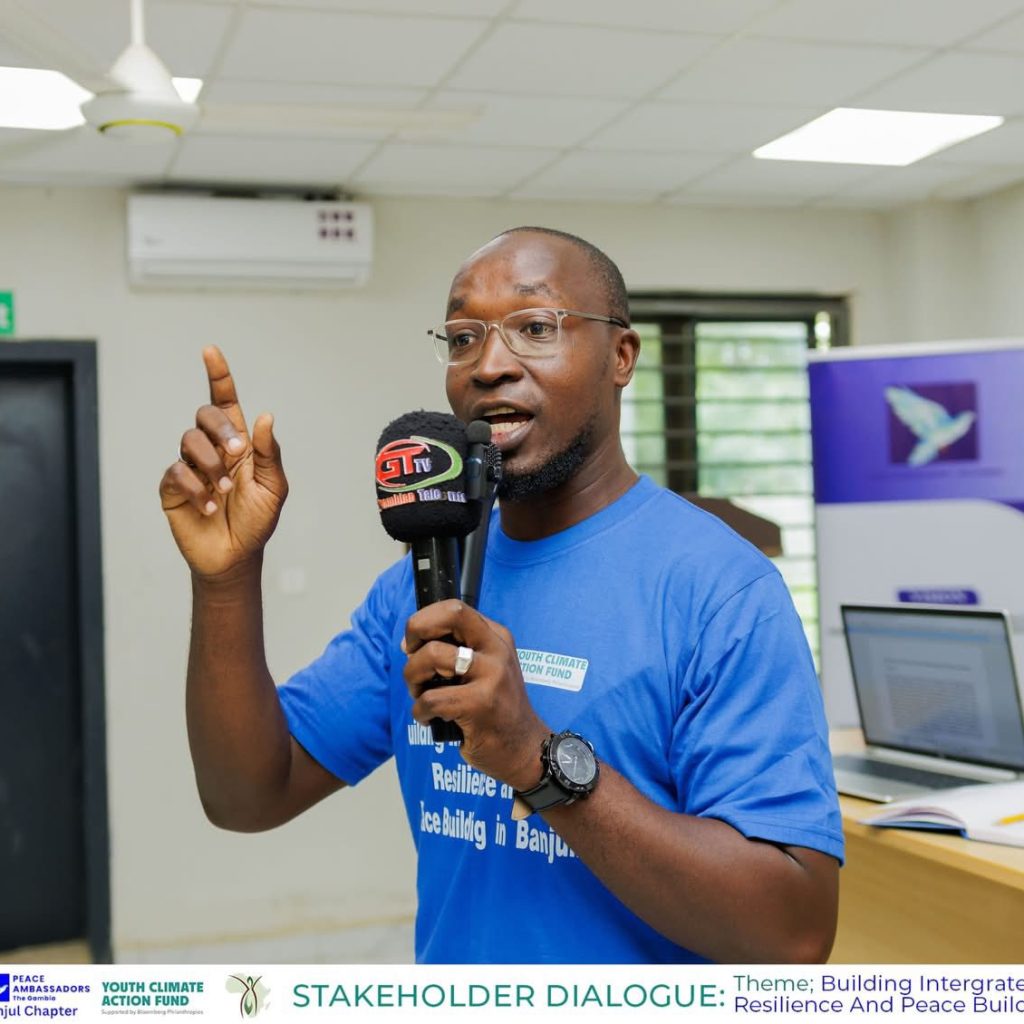
In acknowledging the organizers and partners of the conference, ECOLUM expressed its appreciation to the Young Africans Network for Global Goals for their vision in convening such a timely and inclusive platform. The support of Bloomberg Philanthropies was recognized as a critical enabler of progress, while the role of the Banjul City Council underscored the importance of local government ownership in advancing climate resilience. By bringing together civil society, government institutions, and international partners, the event demonstrated the power of collective action in addressing global challenges at the local level.
As an organization dedicated to advancing climate justice and environmental resilience, ECOLUM sees women and girls not as peripheral stakeholders, but as central to every stage of policy-making, project implementation, and community mobilization. The conference affirmed the path ECOLUM has chosen, strengthening its resolve to deepen its engagements and expand its collaborations.
Looking forward, ECOLUM will integrate the lessons from the conference into its ongoing programs, from waste management and renewable energy initiatives to policy advocacy and international partnerships. By centering women and girls in these efforts, ECOLUM aims to set a standard for climate action that is not only sustainable but also equitable. The organization will also leverage Hon. Njai’s parliamentary platform to ensure that the national climate agenda reflects the principles discussed at the conference, pushing for legislative frameworks that enshrine gender equality in environmental governance.
In closing, ECOLUM recognizes that the challenges of climate change cannot be overcome without collaboration, courage, and compassion. The Women and Girls Climate Conference in Banjul was a testament to all three. It demonstrated that when institutions, communities, and individuals come together, progress is not only possible but inevitable.
Ecolum publish 2025